
Virtual Reality (VR) is rapidly transforming the educational landscape, particularly in the fields of Science, Technology, Engineering, and Mathematics (STEM). By offering immersive, interactive experiences, VR is making STEM subjects more appealing and accessible to students of all ages. This blog post delves into the multifaceted benefits of VR in STEM education, exploring how it can enhance learning outcomes and foster a deeper understanding of complex concepts.
Immersive Learning Environments
One of the most significant advantages of VR in education is its ability to create immersive learning environments. Unlike traditional classroom settings, VR transports students into a fully interactive world where they can explore and experiment in a risk-free setting. This hands-on experience is particularly beneficial for STEM subjects, which often involve abstract concepts and complex systems.
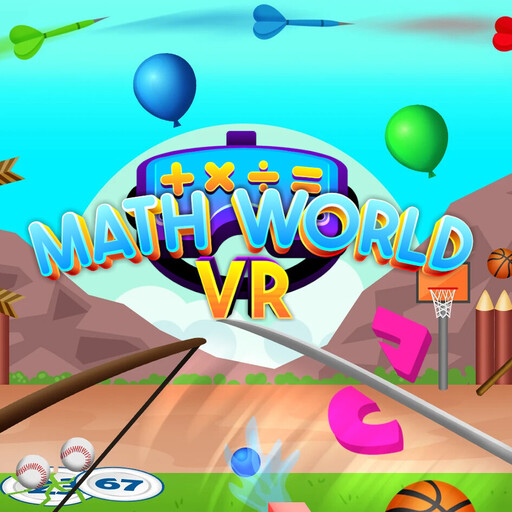
For example, in Math World VR, students can visualize geometric shapes in a three-dimensional space, making it easier to grasp concepts like volume and area. Similarly, in Science World VR, learners can conduct virtual experiments, observing chemical reactions and biological processes up close without the constraints of a physical lab.
Such immersive environments not only enhance understanding but also increase student engagement. When students are actively involved in their learning process, they are more likely to retain information and develop a genuine interest in the subject matter. This is particularly crucial in STEM fields, where student motivation can significantly impact learning outcomes.
Enhancing Critical Thinking and Problem-Solving Skills
VR games are designed to challenge students’ critical thinking and problem-solving abilities. By presenting them with complex scenarios and puzzles, these games encourage learners to think outside the box and develop innovative solutions. In Trivia Monsters, for instance, students must apply their knowledge to solve riddles and advance through levels, promoting a deeper understanding of STEM concepts.
Moreover, VR allows for real-time feedback and adaptation, which is essential for developing problem-solving skills. As students engage with VR simulations, they receive immediate feedback on their actions, enabling them to learn from mistakes and adjust their strategies accordingly. This trial-and-error approach is fundamental in STEM education, where iterative processes and experimentation are key components of scientific inquiry.
By incorporating elements of gamification, VR also makes the learning process more enjoyable. This not only motivates students to participate actively but also fosters a positive attitude towards STEM subjects, which can lead to increased interest and participation in these fields.

Bridging the Gap Between Theory and Practice
One of the challenges in STEM education is the gap between theoretical knowledge and practical application. Many students struggle to see the relevance of abstract concepts to real-world scenarios, which can hinder their understanding and interest in the subject. VR addresses this issue by providing a platform where theoretical knowledge can be applied in practical, real-world contexts.
For example, in an engineering VR simulation, students can design and test their own structures, observing how different variables affect stability and strength. This hands-on approach helps students make connections between classroom learning and real-world applications, deepening their understanding of core STEM principles.
Furthermore, VR can simulate environments and scenarios that are otherwise inaccessible due to cost, safety, or logistical constraints. This democratization of learning resources ensures that all students, regardless of their background, have access to high-quality educational experiences that can enhance their understanding of STEM disciplines.
Fostering Collaboration and Communication
Collaboration and communication are essential skills in the modern workforce, especially in STEM fields where teamwork is often required to solve complex problems. VR facilitates collaboration by allowing students to interact with peers in a shared virtual space, regardless of their physical location.
In VR-based projects, students can work together to solve challenges, share ideas, and learn from each other. This collaborative approach not only enhances learning outcomes but also prepares students for future careers in STEM, where effective communication and teamwork are critical.
Moreover, VR can support diverse learning styles and needs, providing a flexible platform where students can engage with content in ways that suit them best. By fostering an inclusive and collaborative learning environment, VR helps to break down barriers to participation and promote equity in STEM education.
Preparing Students for Future Careers
As technology continues to evolve, the demand for STEM professionals is increasing. VR plays a crucial role in preparing students for future careers by providing them with the skills and experiences needed to succeed in a technology-driven world.
Through VR simulations, students can gain practical experience in fields such as engineering, computer science, and biotechnology. These experiences not only enhance technical skills but also help students develop soft skills, such as critical thinking, problem-solving, and collaboration, which are highly valued by employers.
Furthermore, VR can expose students to a wide range of STEM careers, helping them make informed decisions about their future paths. By providing insights into different professions and industries, VR can inspire students to pursue STEM careers and contribute to the growth and innovation of these fields.
Conclusion
Virtual Reality is revolutionizing STEM education by providing immersive, interactive learning experiences that enhance understanding, engagement, and motivation. By bridging the gap between theory and practice, fostering collaboration, and preparing students for future careers, VR is helping to shape the next generation of STEM professionals. As the technology continues to evolve, its potential to transform education will only grow, offering exciting opportunities for students, educators, and institutions alike.