
The integration of virtual reality (VR) into educational environments is transforming the way students learn, engage, and even compete. The rise of VR esports in schools marks a groundbreaking shift in educational dynamics, where learning is not only immersive but also highly competitive. Imagine a world where mathletes compete in virtual arenas, solving complex equations under pressure, or where science students engage in virtual simulations to solve real-world problems. This is not just a future possibility but an emerging reality.
The Emergence of VR Esports in Education
In recent years, esports has taken the world by storm, with competitive gaming becoming a mainstream phenomenon. Schools have started to recognize the educational potential of esports, incorporating them into curricula to enhance student engagement and learning outcomes. VR esports, in particular, offer a unique blend of immersive learning experiences and competitive elements that traditional educational methods often lack.
VR esports in education are designed to harness the interactive nature of VR technology to create engaging learning environments. These platforms allow students to experience subjects like math, science, and reading in a dynamic and interactive way, making learning more enjoyable and effective. Schools are beginning to use VR esports to host competitions, encouraging students to apply their knowledge in competitive settings, which can significantly enhance motivation and retention.
Moreover, VR esports promote collaboration and teamwork among students. By competing in teams, students learn to communicate effectively, strategize, and work together towards common goals. This not only improves their academic performance but also prepares them for future professional environments where these skills are essential.
Could Mathletes Become a VR Esport?
The concept of mathletes competing in VR arenas is an exciting prospect that could redefine how math competitions are conducted. In traditional settings, math competitions are often limited to solving problems on paper or a digital device. However, VR can take these competitions to the next level by creating immersive environments where students must solve problems in real-time, often under unique and challenging conditions.
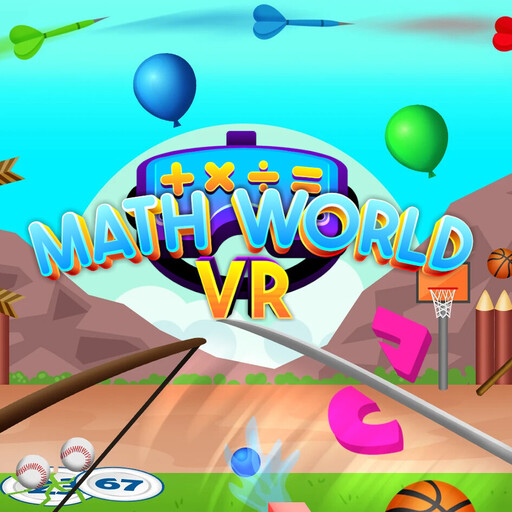
For example, Math World VR, an educational game by Skill Prepare, allows students to engage in math challenges that require them to manipulate 3D objects and solve puzzles in a virtual space. This not only enhances their spatial awareness but also their problem-solving skills. Competitive math in VR could involve tournaments where students from different schools compete in solving increasingly complex problems, with the virtual environment providing immediate feedback and new challenges.
Furthermore, VR math competitions can be made more engaging by incorporating elements of gamification. Leaderboards, achievement badges, and virtual rewards can motivate students to improve their skills and strive for excellence. Such competitions could also be streamed online, adding a new dimension of excitement and community engagement, much like traditional esports.

The Potential of Multiplayer Educational Gaming
Multiplayer educational games have long been a part of the learning landscape, but VR takes this concept to an entirely new level. In a VR environment, students can collaborate or compete in real-time, interacting with both the virtual environment and each other in ways that were previously impossible. This interactive and immersive approach has the potential to significantly enhance learning outcomes.
In multiplayer VR educational games, students can be tasked with solving problems or completing missions that require the application of various skills. For instance, in a science-themed VR game, students might work together to conduct experiments or solve environmental challenges. This not only reinforces their scientific knowledge but also develops critical thinking and problem-solving skills.
Moreover, multiplayer educational gaming encourages a collaborative learning culture. As students work together to achieve common goals, they develop a sense of community and shared purpose. This can lead to improved communication skills and better relationships among peers, creating a more positive and engaging learning environment.
Implementing VR Esports in Schools
For schools looking to implement VR esports, there are several considerations to keep in mind. Firstly, schools need to invest in the necessary hardware and software to support VR esports activities. This includes VR headsets, powerful computers, and educational VR content that aligns with the curriculum.
Training teachers to effectively use VR technology is also crucial. Educators need to understand not only how to operate VR equipment but also how to integrate it into their teaching strategies to enhance learning. Professional development programs focused on VR technology can equip teachers with the skills they need to succeed.
Additionally, schools should establish clear goals and objectives for their VR esports programs. Whether the focus is on improving student engagement, enhancing learning outcomes, or promoting teamwork, having a clear vision will guide the implementation process and ensure that the program meets its intended objectives.
Challenges and Considerations
While the benefits of VR esports in education are significant, there are also challenges that schools must address. One of the main challenges is the cost of VR equipment and the necessary infrastructure. Schools need to balance budget constraints with the potential benefits of investing in VR technology.
Another challenge is ensuring that all students have equal access to VR esports activities. Schools must strive to create an inclusive environment where all students, regardless of their background or abilities, can participate and benefit from VR esports. This may involve providing additional support and resources for students who need them.
Privacy and data security are also important considerations. Schools must ensure that any data collected through VR esports activities is stored securely and used in compliance with relevant laws and regulations. Protecting student privacy is paramount to maintaining trust and ensuring the long-term success of VR esports programs.
Conclusion: The Future of Competitive Learning
As VR technology continues to evolve, the potential for VR esports in schools is vast. By integrating competitive learning with immersive technology, schools can create dynamic educational environments that engage students and enhance their learning experiences. Whether through math competitions in virtual arenas or collaborative science missions, VR esports offers exciting opportunities for the future of education.
For educators and school administrators, embracing VR esports requires careful planning, investment, and a commitment to innovation. However, the potential rewards – improved student engagement, enhanced learning outcomes, and the development of essential 21st-century skills – make it a worthwhile endeavor. As VR esports becomes more prevalent in schools, it will undoubtedly pave the way for new and exciting educational possibilities.